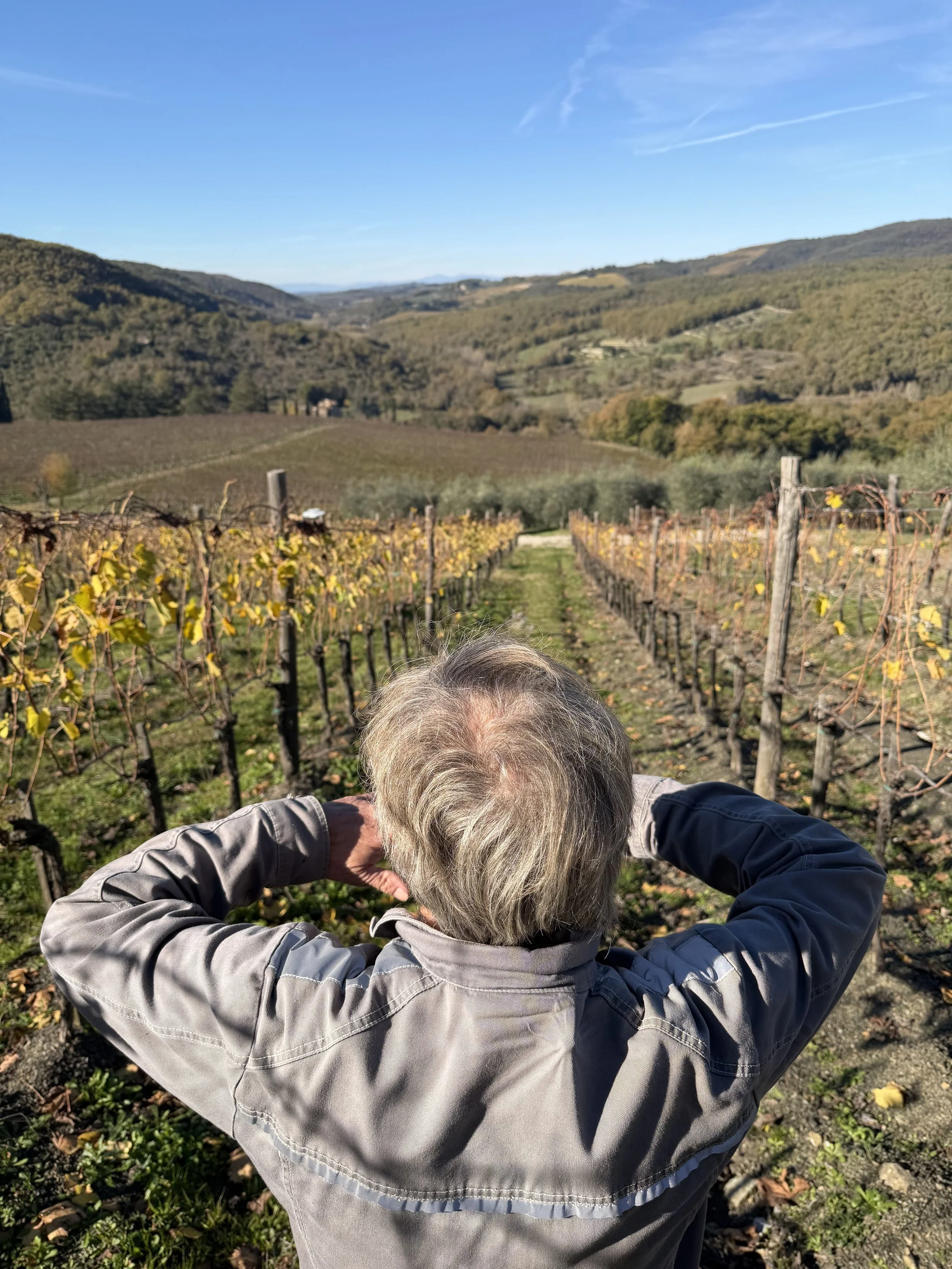
Welcome to Rare Wine-uary aka Allocated Dry January.

Where the wines are (mostly) dry. We'll be opening rare and allocated wines for each of our Thursday night tastings. Special wines we receive small allotments of, typically stowed away in cellars for lists and private offers. Wine is for the people, pull that cork!

CAPARSA
Radda, Chianti, Italy
w/ Molly of importer Loci Wine
January 15th 6-9pm


Incredbly compelling wines from the highly regarded Chianti commune of Radda. Wines with soul from the higher elevations of Radda that we've been itching to pour again. After a long hiatus in Chicago, importer Loci has come to the rescue.


Tasting from 6-9pm
$10 to Taste - Free for Wine Club
Casual tasting, show up antyime between 6pm and 8:30pm ish.


Happy Hours: 5-7pm
Bar Opens: 5pm
Shop Opens: 5pm

-

From the Importer...
Established in 1965 by his father in an abandoned farm in some of the highest and coolest reaches of Radda, Paolo Cianferoni has lived here for decades, building a small winery in a centuries-old cellar and building a family with his wife Gianna, where forests dominate the property and vineyards make up only a small part of the land. He has has spent his life here, officially taking the reins of the estate in 1982, where these 12 hectares of vines speak with a deep and intuitive sense of the true Radda terroir: intense but lifted, harnessing Sangiovese’s inimitable tannin and acidity, while bringing a sense of clarity and presence.

Caparsa is widely recognized as one of the benchmark naturalist producers of Radda–in particular this more sparse and difficult northern part of the Pesa River’s left bank, where elevations are at 450+ meters, and soils display a combination of clay (argille) and limestone (albarese), with sand and other sediments intermixed along the vineyards. Much like their friend Gabriele Buondonno, both farming and the work in the cellar has been forthrightly natural for decades. The family is especially dedicated to the vines, and their careful attention to each plant–their exposures to sun and wind, their hardiness to drought, even whether or not the boars like to eat them each year–is the genesis for the various Riserva bottlings as well as considered replanting via massale selection.

Though the family estate counts 12 hectares of vines, the winery and cellar, built out of ancient buildings, can sustain just a fraction of this juice, so less than 40,000 bottles are produced by Caparsa each year, with the rest of the fruit sold off. They could easily sell twice this amount, though it would amount to a fundamental restructuring of their land (and lives). Fermentations are spontaneous of course, predominantly in half-century old cement and concrete vats. Aging for the Riserva wines is primarily in mixed botti, from 10hl Stockinger and Mittelberger for Doccio, and 20-30hl 40-year old botti for Caparsino, though some concrete aging is employed depending on the vintages. Low doses of sulfur are added at bottling, with free sulfur between 20 and 30 mg/l.